
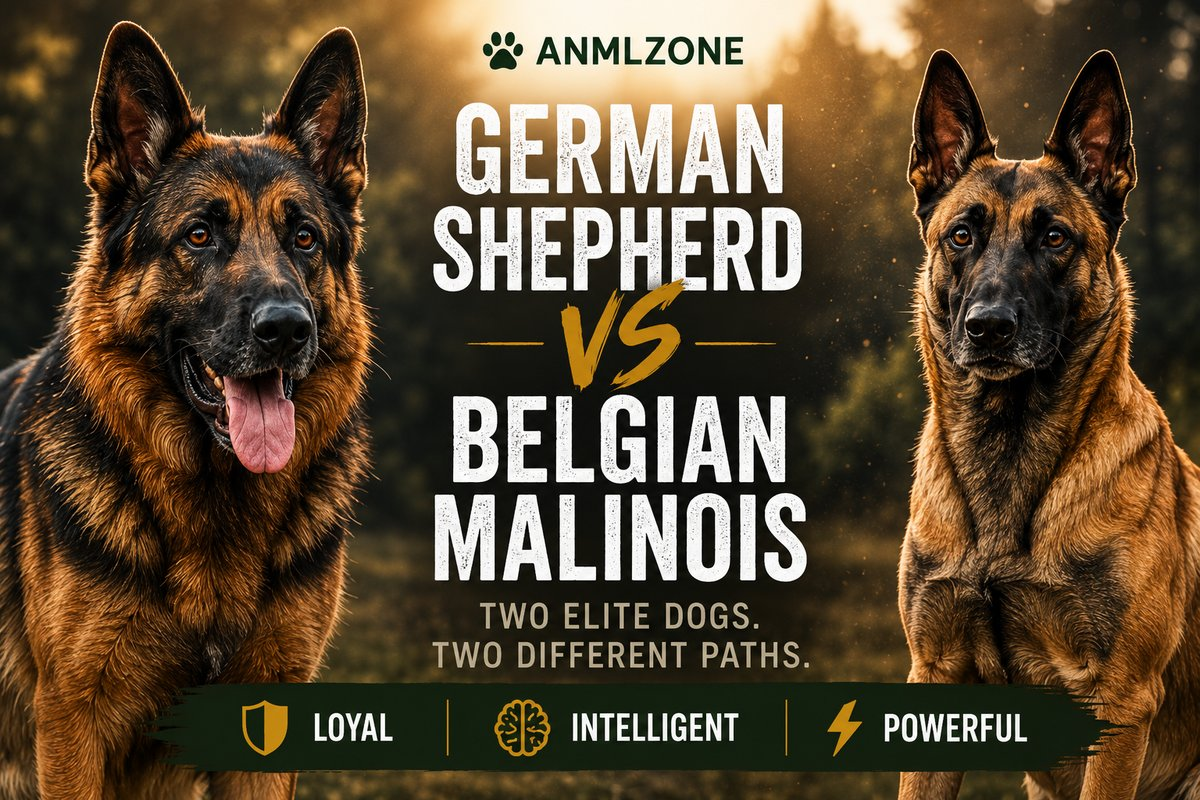
German Shepherd vs Belgian Malinois: Quick Answer
German Shepherd vs Belgian Malinois is one of the most common comparisons among people looking for an intelligent, loyal, and protective dog. While both breeds excel as working dogs, they differ significantly in energy levels, trainability, temperament, and overall lifestyle requirements.
At first glance, they look remarkably similar, which is why many people assume they’re almost the same breed. In reality, a German Shepherd is generally calmer, more adaptable, and better suited to family life, while a Belgian Malinois has a much stronger working drive and thrives with experienced owners who can provide daily physical and mental challenges.
If you’re looking for a well-rounded family protector, the German Shepherd is usually the better choice. If you want an elite working or sport dog and have the experience to match its incredible energy, the Belgian Malinois is hard to beat.
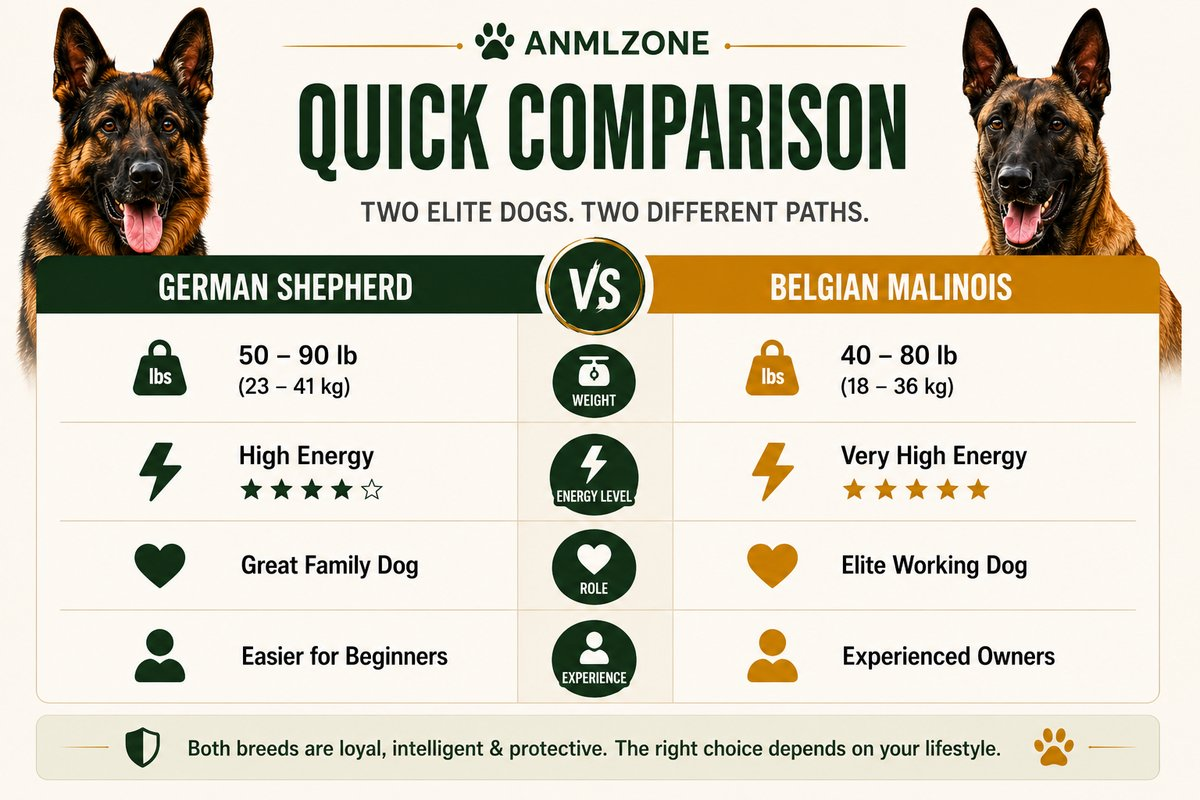
German Shepherd vs Belgian Malinois at a Glance
| Category | German Shepherd | Belgian Malinois |
|---|---|---|
| Best For | Families, first working dog | Experienced owners |
| Energy | High | Extremely High |
| Intelligence | ★★★★★ | ★★★★★ |
| Trainability | Excellent | Exceptional |
| Protection | Excellent | Elite |
| Good With Kids | Yes | Yes, with proper training |
| Grooming | Moderate to Heavy | Low to Moderate |
| First-Time Owners | Sometimes | Not Recommended |
German Shepherd vs Belgian Malinois Which Dog Is Better?
At first glance, these two breeds look surprisingly similar. Both have erect ears, athletic bodies, incredible intelligence, and are often seen working with police and military units around the world.
Because of that, many people assume they’re basically the same dog.
They aren’t.
In reality, they were bred for slightly different purposes, and those differences completely change what it’s like to live with them every day.
A German Shepherd is often easier to manage in a family home. They are confident, loyal, protective, and usually know how to switch off after exercise.
A Belgian Malinois rarely has an “off switch.”
That endless drive is exactly why military units and professional handlers love them—but it’s also why so many first-time owners become overwhelmed.
If you’re choosing between these breeds, understanding their personalities is far more important than comparing their appearance.
Although they look remarkably similar, the German Shepherd and Belgian Malinois are two completely different breeds. The German Shepherd was originally developed as a versatile herding and working dog, while the Belgian Malinois was bred for speed, agility, and intense working performance—differences that still shape their personalities today.
German Shepherd vs Belgian Malinois Appearance
Although they share a similar silhouette, there are several easy ways to tell them apart.
German Shepherds have a larger frame, a broader chest, and a more substantial head. Their coat is usually thicker, especially around the neck and tail, giving them a more powerful appearance.
Belgian Malinois are leaner and more athletic. Their muscles are clearly defined, their body is lighter, and they almost always wear the distinctive black facial mask that makes the breed instantly recognizable.
A Malinois often looks like an athlete.
A German Shepherd looks like a bodyguard.
Neither appearance is better—they simply reflect different breeding goals.
Size Comparison German Shepherd vs Belgian Malinois
German Shepherds are generally larger dogs.
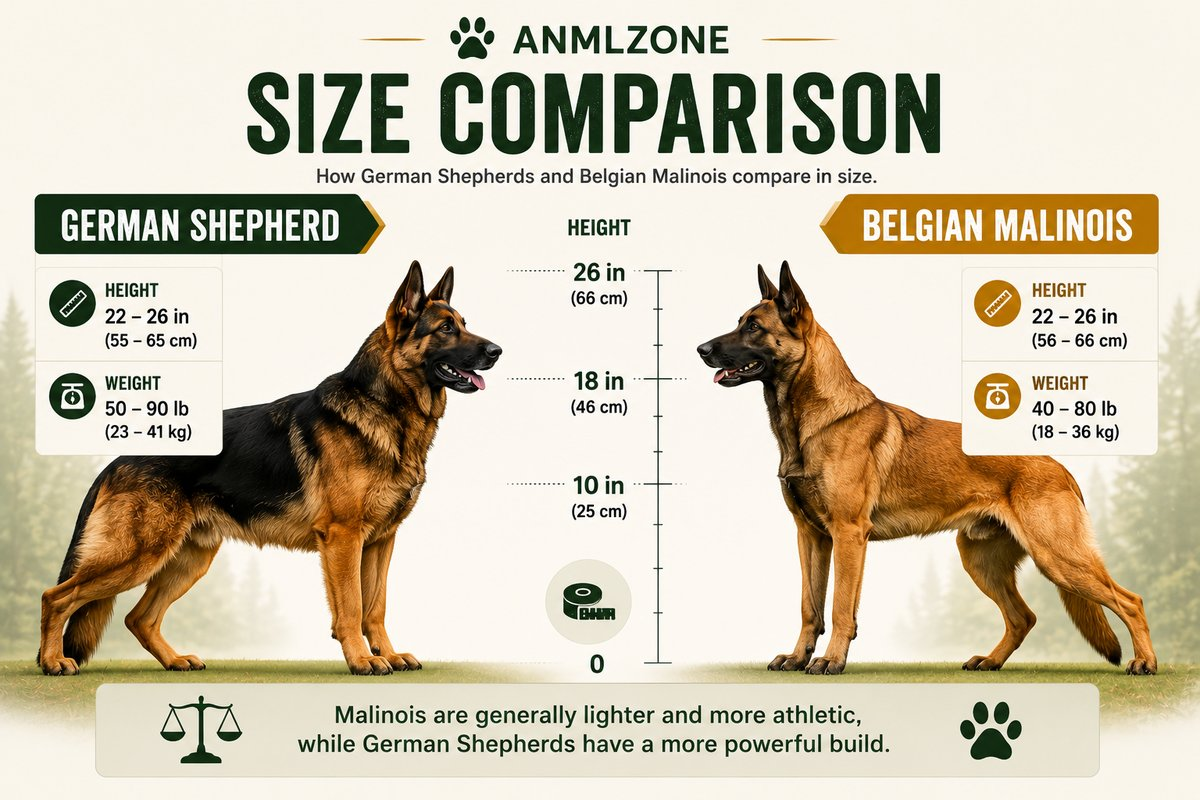
German Shepherd
- Height: 22–26 in (55–65 cm)
- Weight: 50–90 lb (23–41 kg)
Belgian Malinois
- Height: 22–26 in (56–66 cm)
- Weight: 40–80 lb (18–36 kg)
While both breeds can reach similar heights, the Malinois usually carries much less body weight.
That lighter build makes them incredibly fast, agile, and explosive during work.
German Shepherd vs Belgian Malinois Temperament
This is where the biggest differences begin.
German Shepherds are naturally protective but tend to think before reacting. They carefully observe new situations and often assess whether someone is actually a threat.
Belgian Malinois react much faster.
Their working drive is extremely strong, and they constantly look for something to do.
Many owners describe living with a Malinois as living with an Olympic athlete who never wants a day off.
German Shepherds are usually easier to relax with after a walk.
A tired Malinois often wants another job.
German Shepherd vs Belgian Malinois Energy Levels
If you’re looking for an active dog, both breeds qualify.
But they exist on completely different levels.
A German Shepherd is generally satisfied with long walks, training sessions, games, and family activities.
A Belgian Malinois often needs all of that—and then some.
Without enough mental stimulation, they don’t simply become bored.
They create their own entertainment.
That can mean:
- chewing furniture
- digging holes
- barking excessively
- chasing shadows
- destroying toys within minutes
- inventing games that owners rarely enjoy
This isn’t bad behavior.
It’s simply a working dog with unused energy.
Intelligence & Trainability
Both breeds consistently rank among the smartest dogs in the world.
However, intelligence doesn’t always make ownership easier.
German Shepherds tend to forgive beginner mistakes. They usually learn quickly while remaining patient with inexperienced handlers.
Belgian Malinois learn even faster—but they also notice every inconsistency.
If your commands aren’t clear, they’ll often make their own decisions.
That’s why professional trainers love them.
They can perform extraordinary tasks with incredible precision.
But without structure, that same intelligence becomes difficult to manage.
For obedience, agility, scent work, protection sports, and advanced training, the Belgian Malinois has a slight edge.
For everyday family life, the German Shepherd is often the easier student.
Looking for a faster, more elegant working breed? The Dobermann is another intelligent protector that excels in obedience and personal protection.
Which Breed Is Better With Families?
For most households, the answer is straightforward.
The German Shepherd.
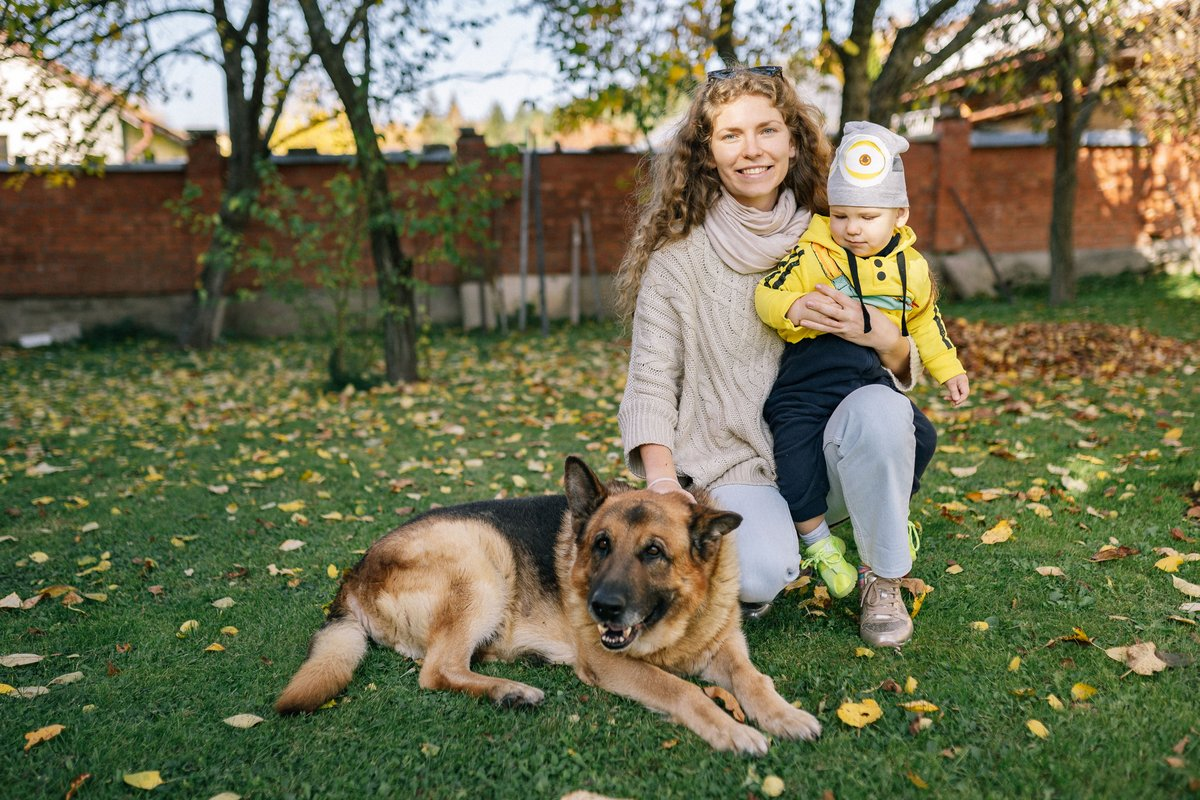
They form incredibly strong bonds with their family and usually adapt well to children when properly socialized.
They enjoy activity but also appreciate relaxing near the people they trust.
Belgian Malinois can absolutely become wonderful family dogs.
However, they demand far more time, consistency, and training than many families expect.
If children are constantly running around the yard, a young Malinois may try to herd them, chase them, or turn playtime into a full-speed training session unless those instincts are properly managed.
That doesn’t make them aggressive.
It simply reflects generations of breeding for intense working ability.
Protection Instincts
Both breeds are famous for their protective nature, but they don’t protect in exactly the same way.
German Shepherds are confident, calm, and naturally suspicious of strangers without being unnecessarily reactive. They were bred to think before acting, making them excellent family guardians.
Belgian Malinois, on the other hand, possess an incredibly intense working drive. They react faster, move faster, and often show much higher defensive energy. This is one reason why they are widely used by military and special police units around the world.
For the average owner, however, “more intense” does not automatically mean “better.”
A family dog should also know when to relax.
Curious how these two compare with other protective breeds? Take a look at our list of the Top 10 Best Guard Dogs to see which breeds made the rankings.
Best Choice
🏆 German Shepherd for most families.
🏆 Belgian Malinois for professional working roles.
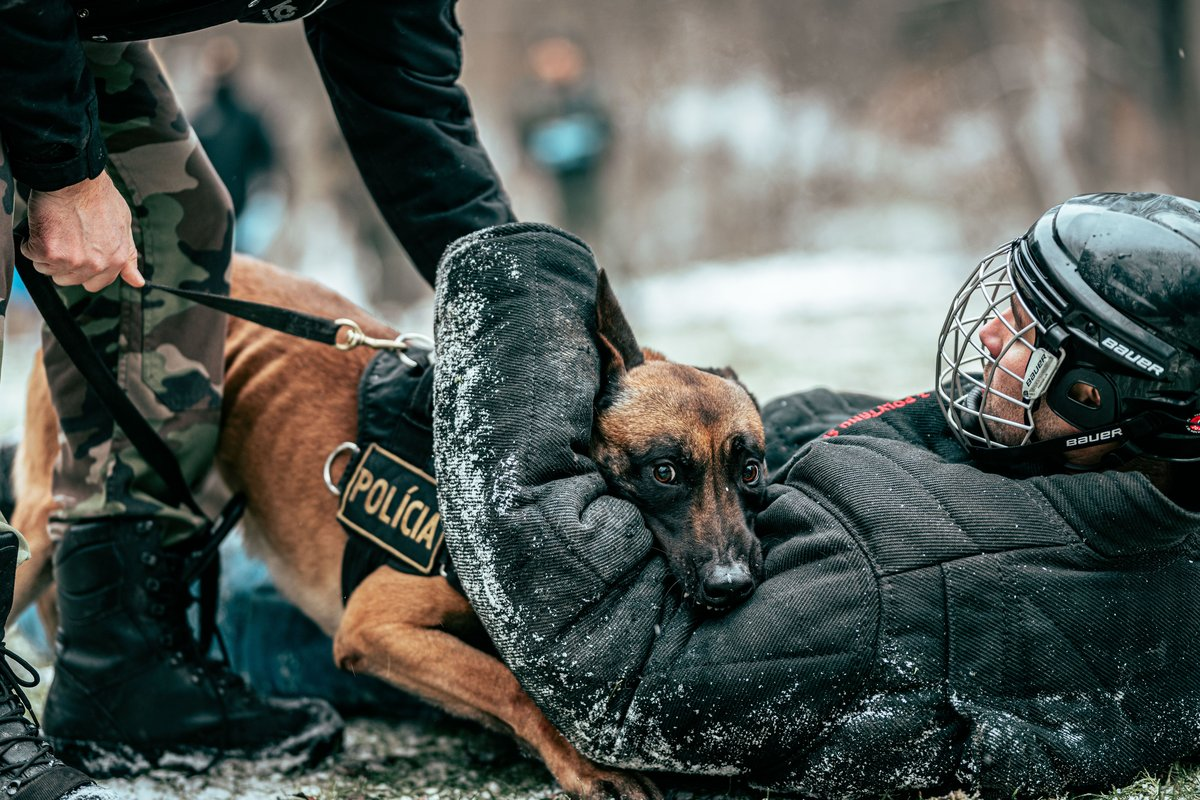
Exercise Requirements
This is where many people underestimate the Belgian Malinois.
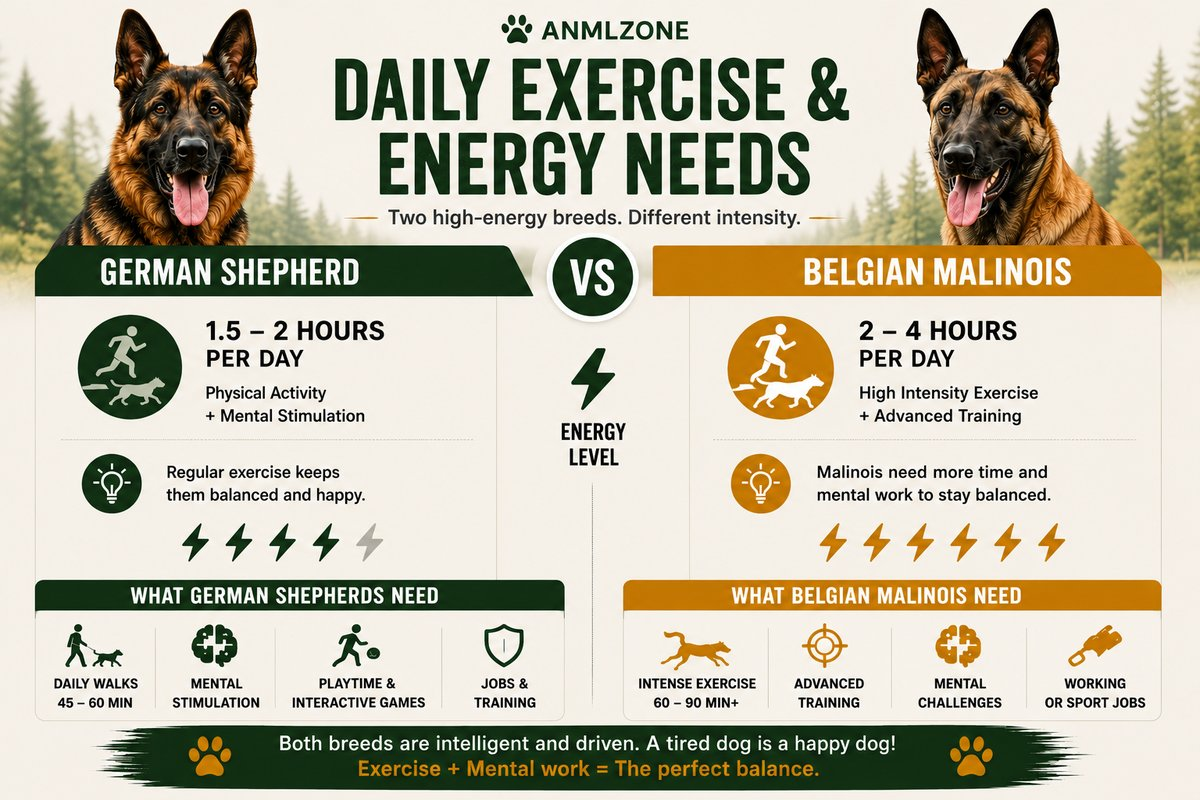
German Shepherd
A healthy adult German Shepherd generally needs around 1.5 to 2 hours of combined physical exercise and mental stimulation each day.
That can include:
- Long walks
- Hiking
- Obedience training
- Fetch
- Puzzle toys
- Playing with the family
Most owners can realistically provide this routine.
Belgian Malinois
A Belgian Malinois often needs 2 to 4 hours every day.
Not just running.
They need a job.
Examples include:
- Advanced obedience
- Agility
- Scent work
- Bite work (with professionals)
- Tracking
- Complex problem-solving games
Without consistent mental stimulation, many Malinois develop unwanted behaviors simply because their brains are searching for something to do.
Better for Most Owners
🏆 German Shepherd
Much easier for the average active family.
German Shepherd vs Belgian Malinois Health & Lifespan
No dog breed is completely free of health issues.
According to the American Kennel Club (AKC), both breeds benefit from early socialization, consistent training, and health screenings to help prevent common inherited conditions.
German Shepherd
Common concerns include:
- Hip dysplasia
- Elbow dysplasia
- Degenerative myelopathy
- Bloat (gastric dilatation-volvulus)
Average lifespan:
9–13 years
Belgian Malinois
Generally considered one of the healthier working breeds.
Possible issues include:
- Hip dysplasia
- Progressive retinal atrophy (rare)
- Epilepsy (uncommon)
Hip dysplasia remains one of the most common orthopedic conditions affecting large dog breeds. Responsible breeders often perform hip and elbow evaluations through the Orthopedic Foundation for Animals (OFA) before breeding.
Average lifespan:
12–14 years
Health Advantage
🏆 Belgian Malinois
Slightly healthier overall with a longer average lifespan.
Grooming
Neither breed is particularly difficult to groom, but there are differences.
German Shepherds are famous for shedding.
In fact, many owners joke that they “shed twice a year”—for six months each time.
Expect frequent brushing, especially during seasonal coat changes.
Belgian Malinois have shorter coats and generally require much less maintenance.
A weekly brushing is often enough.
Winner
🏆 Belgian Malinois
Less fur around the house and less grooming time.
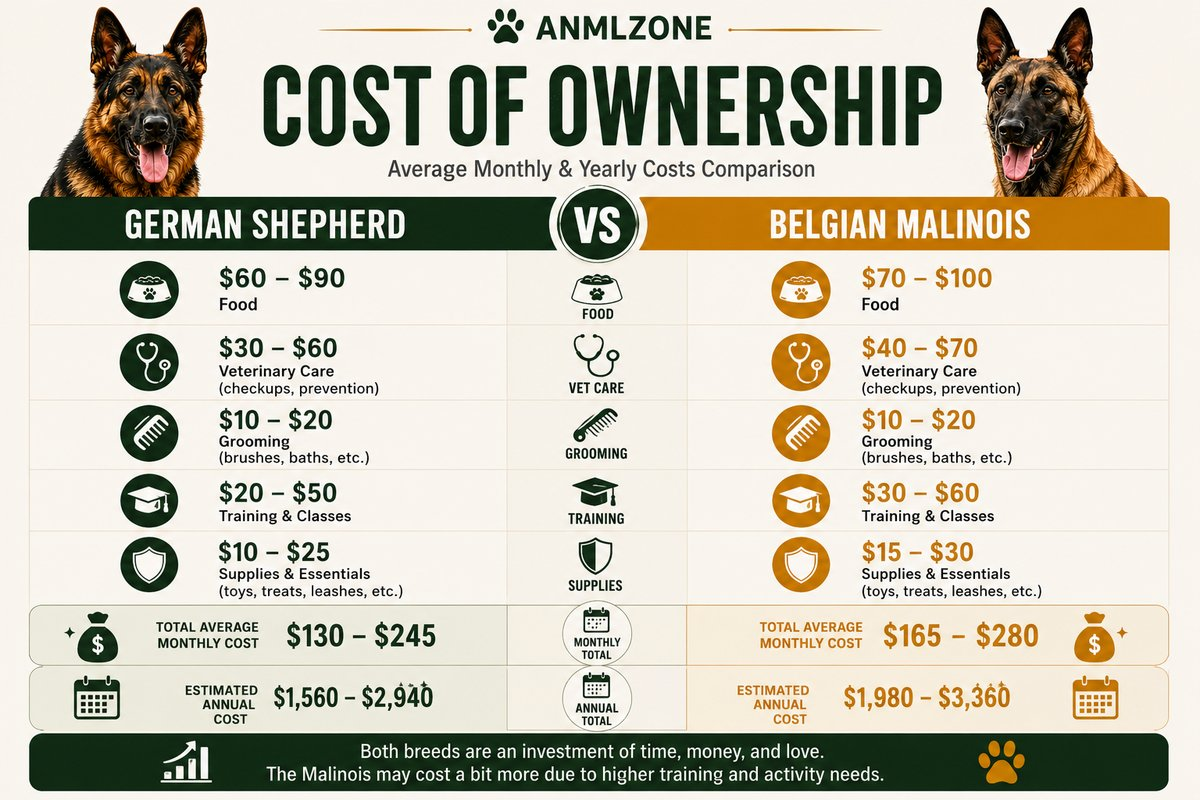
German Shepherd vs Belgian Malinois Cost of Ownership
These breeds cost more than many people expect.
Annual expenses can include:
- Premium food
- Veterinary care
- Vaccinations
- Parasite prevention
- Training
- Toys
- Equipment
- Pet insurance (optional)
German Shepherds may require higher veterinary expenses later in life because of orthopedic issues.
Belgian Malinois often cost more in training, enrichment, and durable equipment because of their intense activity level.
In reality, both breeds represent a significant long-term financial commitment.
Winner by Category
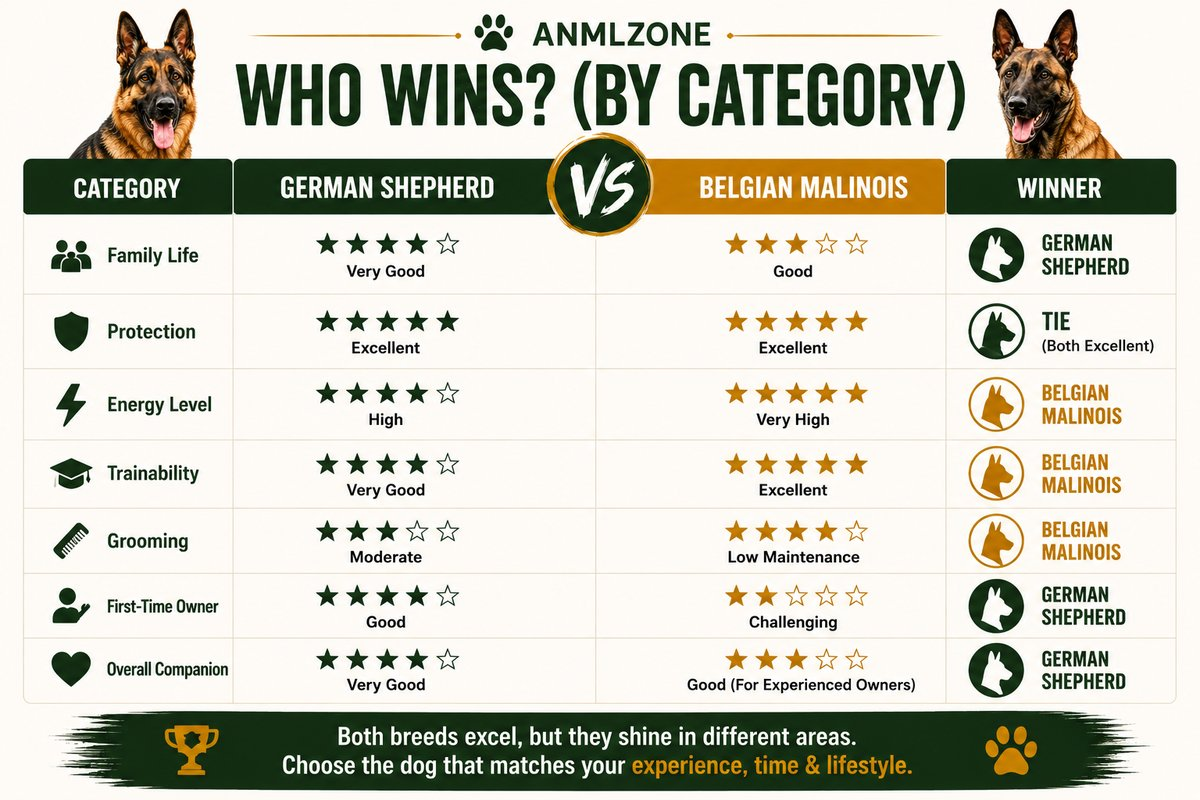
Final Verdict
Choosing between a German Shepherd and a Belgian Malinois isn’t about finding the “better” dog—it’s about finding the breed that matches your lifestyle.
If you want a loyal, intelligent, protective companion that can guard your family while still enjoying quiet evenings at home, the German Shepherd is usually the better choice.
If you’re an experienced owner looking for an elite working dog capable of excelling in advanced training, protection sports, or demanding jobs, the Belgian Malinois is almost impossible to match.
Or if you’re still unsure, another excellent family guardian worth considering is the Cane Corso, known for its confidence, loyalty, and calm temperament.
The biggest mistake people make is choosing a Malinois simply because they admire military or police dogs online.
Those dogs succeed because they receive professional training, structured routines, and daily work—not because the breed is naturally easy to own.
Still comparing guard dogs? You may also enjoy our detailed Rottweiler vs Doberman comparison, where we break down two of the world’s most popular protection breeds.
Choose the breed that fits your life, not the one that simply looks the most impressive.
Frequently Asked Questions
Is a Belgian Malinois smarter than a German Shepherd?
Both breeds are exceptionally intelligent. Belgian Malinois usually learn new commands slightly faster and excel in advanced working roles, while German Shepherds are generally easier for everyday owners to train and manage successfully.
Which breed is more protective?
Both breeds are excellent protection dogs. German Shepherds tend to assess situations before reacting, making them ideal family guardians, while Belgian Malinois often respond faster and with greater intensity, especially in working environments.
Is a Belgian Malinois good for first-time owners?
Generally, no. Belgian Malinois have extremely high energy levels and require consistent training, mental stimulation, and experienced handling. Most first-time owners are usually better suited to a German Shepherd.
Which breed sheds more?
German Shepherds shed significantly more throughout the year, especially during seasonal coat changes. Belgian Malinois have a shorter coat that is easier to maintain and typically sheds less.
Which dog is better with children?
When properly trained and socialized, both breeds can be excellent with children. However, the German Shepherd is generally considered the better choice for most families because of its calmer temperament and adaptability.
🐾 Explore More Animals
 Dobermann – Strength, Loyalty, and Intelligence in One Elegant Dog
  Belgian Malinois Dog: What to Know Before Owning One
  Top 10 Best Guard Dogs That Will Protect Your Family (2026)
  Cane Corso Dog Breed: The Ultimate Family Protector You Need to Know About
  German Shepherd Dog: What to Know Before Owning One
  How to Stop Your Puppy from Whining in the Crate at Night
  Pileated Woodpeckers: Forest Icons
  Rottweiler Dog: What to Know Before Owning One


