

The mantis shrimp may look like a small tropical crustacean, but it has one of the most powerful strikes ever discovered in the ocean.
Using specialized hammer-like arms, this tiny predator can punch with incredible speed and force — strong enough to smash crab shells and even crack aquarium glass in some cases.
Scientists have spent years studying the mantis shrimp punch because very few animals on Earth can move this fast.
What is a Mantis Shrimp?
Mantis shrimp are marine crustaceans known as stomatopods. Although they are called “shrimp,” they are actually more closely related to crabs and lobsters.
These fascinating predators live in tropical and subtropical oceans, where they hide inside burrows, coral reefs, and rocky crevices. Some species grow only a few inches long, yet they are considered some of the most aggressive hunters on the reef.
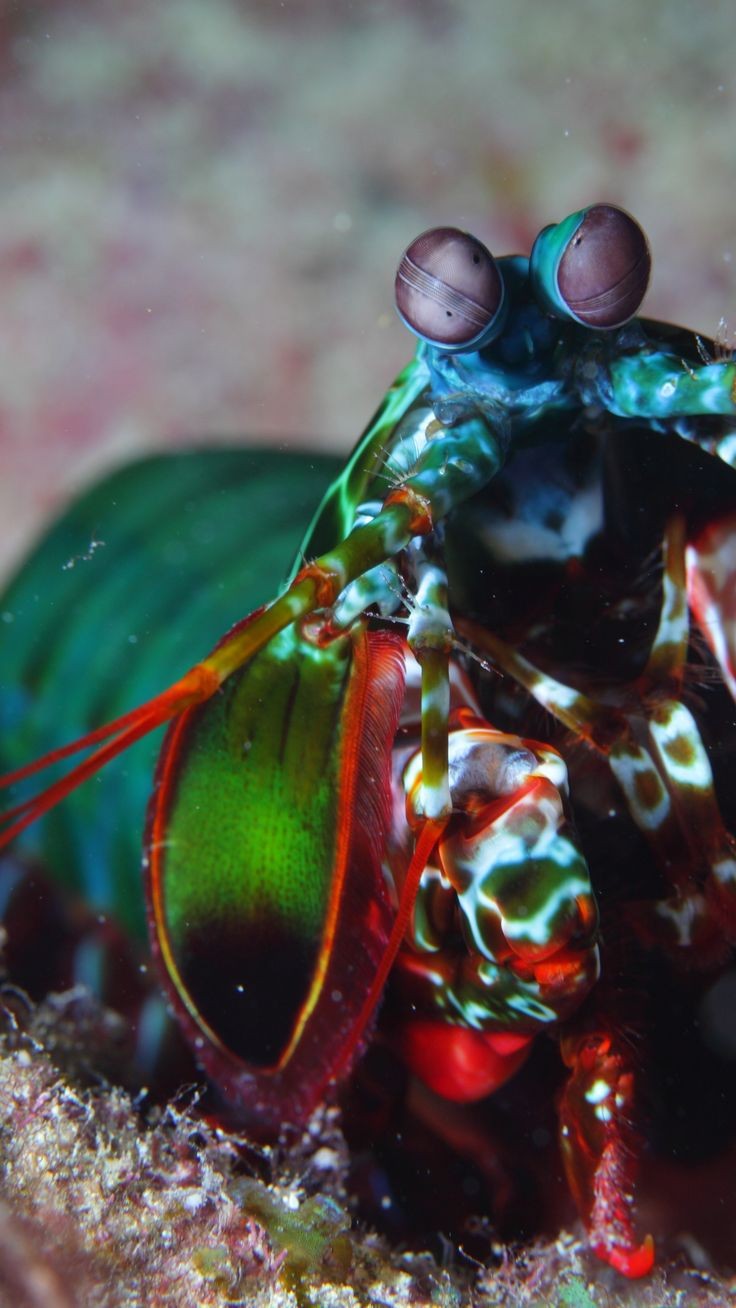
One of the most famous species is the peacock mantis shrimp (Odontodactylus scyllarus), known for its bright green, blue, orange, and red colors.
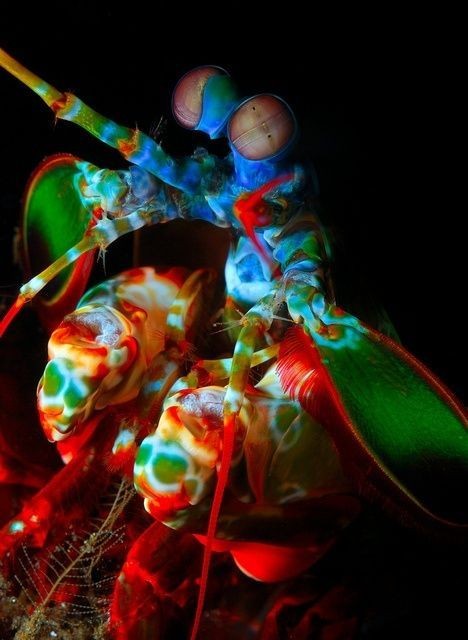
At first glance, they almost look too colorful to be dangerous.
But the mantis shrimp is hiding one of the most powerful attacks in the ocean.
How Strong Is the Mantis Shrimp Punch?
The mantis shrimp is famous for its devastating punch.
Using specialized hammer-like arms called dactyl clubs, this tiny predator strikes prey with incredible speed and force. Scientists have even compared the impact to the force of an equivalent to a .22 caliber bullet.

A mantis shrimp punch can:
- smash crab shells instantly
- break snail shells apart
- create underwater shockwaves
- deliver impacts powerful enough to crack aquarium glass
For such a small marine animal, the amount of power it generates is almost unbelievable.
How Fast Can a Mantis Shrimp Strike?
The mantis shrimp punch can reach speeds of up to 50 mph (80 km/h) underwater.
Its arms accelerate faster than almost any other movement in the animal kingdom — reaching over 10,000 times the force of gravity.
That makes it one of the fastest biological movements ever recorded.
The strike happens so quickly that the surrounding water reacts in an unusual way.
And that’s where things get even crazier.
What Is Cavitation?
When the mantis shrimp strikes, the movement is so fast that it creates tiny bubbles in the surrounding water.
These bubbles instantly collapse and release bursts of energy, heat, and pressure in a process called cavitation.
What makes this even more incredible is that the collapsing bubbles create a second shockwave immediately after the original punch.
That means prey can be damaged twice:
- by the direct impact
- by the underwater shockwave that follows
Scientists discovered that the temperatures generated during cavitation can briefly become extremely hot, approaching temperatures similar to the surface of the sun.
For an animal only a few inches long, that level of power is absolutely insane.
Can a Mantis Shrimp Break Glass?
Yes — larger mantis shrimp species have been known to crack thin aquarium glass with their punches.
Because of their incredible striking power, some aquariums avoid keeping them in standard glass tanks. Experienced keepers often use thick acrylic aquariums designed to handle powerful impacts instead.
This unusual ability has made mantis shrimp legendary among marine aquarium enthusiasts.
A Tiny but Fearless Hunter
Mantis shrimp are aggressive ambush predators.
They wait inside burrows before exploding outward with lightning-fast strikes. Their prey includes:

- crabs
- snails
- clams
- small fish
- other crustaceans
Unlike many ocean predators that rely on venom or sharp teeth, mantis shrimp depend almost entirely on speed, precision, and brute force.
Even heavily armored prey often has no time to react.
If you enjoy bizarre marine predators, you might also like the Mimic Octopus, a master of camouflage capable of impersonating other sea animals.
The Mantis Shrimp’s Incredible Vision
As impressive as the mantis shrimp punch is, their eyes may be even more fascinating.
Mantis shrimp possess one of the most advanced visual systems on Earth.

Humans have only 3 color receptors, while mantis shrimp can have up to 16 different photoreceptors, allowing them to detect:
- ultraviolet light
- polarized light
- colors humans cannot even imagine
Each eye can also move independently, giving them incredible depth perception and tracking ability.
Scientists continue studying mantis shrimp vision because it may help improve:
- medical imaging technology
- satellite sensors
- optical communication systems
Very few animals experience the world the way mantis shrimp do.
Their strange vision abilities are just as fascinating as creatures like the Glass Squid or the mysterious Blue Dragon Sea Slug.
Why Scientists Study Mantis Shrimp
The mantis shrimp isn’t just fascinating — it has also inspired real-world technology.
Researchers study the structure of their dactyl clubs to help design:
- stronger body armor
- impact-resistant materials
- aerospace components
- sports equipment
The mantis shrimp’s club is incredibly durable because it can survive repeated high-speed impacts without breaking apart.
Engineers hope future materials could mimic the same structure.
Nature may have already solved problems humans are still trying to figure out.
What makes the mantis shrimp so powerful?
Mantis shrimp have specialized club-like arms that accelerate at extreme speed, allowing them to deliver one of the strongest strikes in the animal kingdom.
How fast is a mantis shrimp punch?
A mantis shrimp strike can reach around 50 mph underwater, making it one of the fastest biological movements ever recorded.
Can a mantis shrimp really break glass?
Yes, larger species can crack thin aquarium glass, which is why acrylic tanks are often used instead.
What is cavitation in mantis shrimp strikes?
Cavitation is the formation and collapse of bubbles caused by the shrimp’s fast strike, producing a second shockwave.
Quick Facts About the Mantis Shrimp
- Strike speed: up to 50 mph (80 km/h)
- Punch acceleration: over 10,000 g
- Can smash crab shells instantly
- Creates powerful underwater shockwaves
- Some species can crack aquarium glass
- Possesses one of the world’s most advanced eyes
- Lives in tropical and subtropical oceans
- One of the fastest animal movements ever recorded

Final Thoughts
The mantis shrimp proves that size means nothing in the animal kingdom.
Hidden among coral reefs is a tiny predator capable of delivering one of the fastest and most destructive strikes on Earth — all while seeing the world in ways humans never can.
From bullet-like punches to alien-level vision, the mantis shrimp is easily one of the most extraordinary marine creatures ever discovered.
If you enjoy strange ocean animals and nature’s hidden superpowers, the mantis shrimp is impossible to ignore.
You may also enjoy reading about the Pistol Shrimp, another incredible sea creature capable of creating shockwaves underwater using sound instead of punches.
Animal Journey
Follow this path to keep exploring related animals and comparisons.

Dumbo Octopus: The Cutest Deep Sea Creature Ever Discovered?
Continue journey →
Mimic Octopus: The Sea Creature That Can Impersonate Other Animals
Continue journey →
10 Most Intelligent Octopuses in the World
Continue journey →
Glass Squid: The Invisible Hunter of the Deep Sea
Continue journey →🐾 Explore More Animals
 Himalayan Rabbit – Should You Get One? Full Beginner Guide
  Rottweiler vs Doberman: Which Guard Dog Is Better in 2026?
  Mimic Octopus: The Sea Creature That Can Impersonate Other Animals
  Top 10 Dangerous Animals That Look Cute (But Can Kill You)
  Margay wildcat: The Rare Wildcat That Climbs Like a Monkey
  Blue Dragon: The Tiny Sea Slug That Can Sting Like a Jellyfish
  Akita Breed: A Symbol of Loyalty and Strength
  Pileated Woodpeckers: Forest Icons


